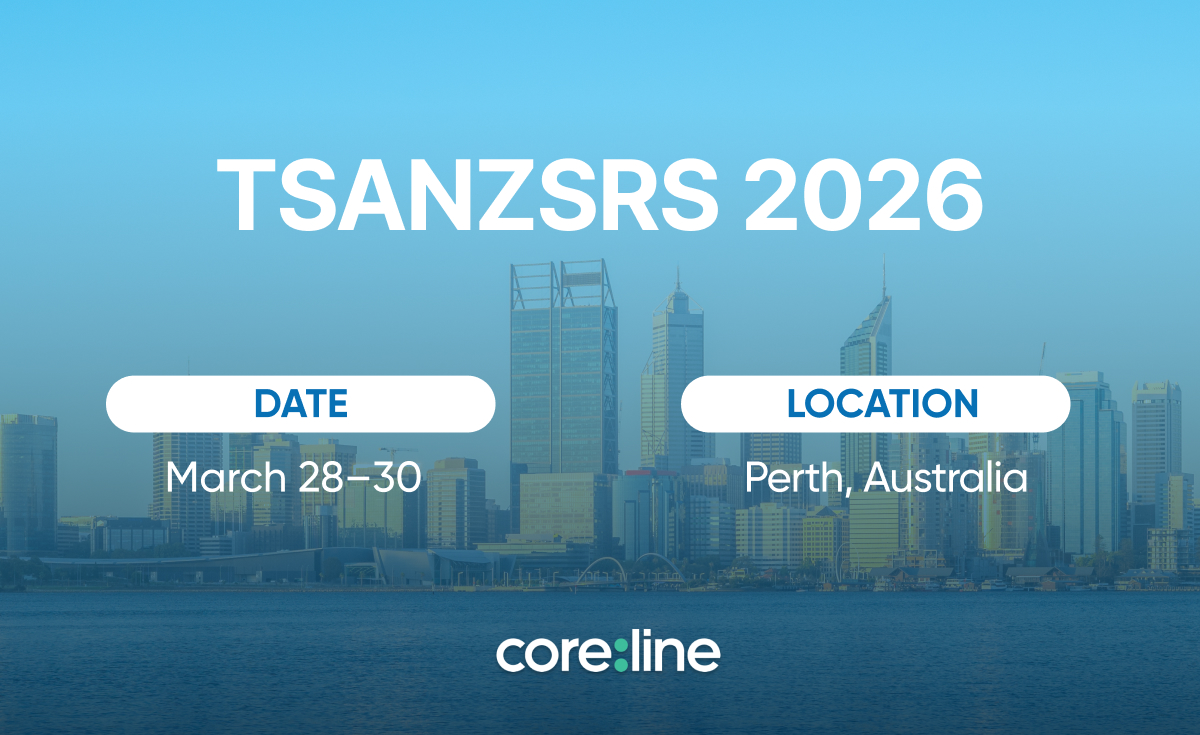
Advancing AI-Driven Lung Health Infrastructure
Coreline Soft will participate in TSANZSRS 2026, presenting our AI-based lung health analysis platform designed to support scalable respiratory imaging workflows.
As respiratory medicine increasingly moves toward data-driven and longitudinal management, chest CT is evolving from a diagnostic tool into a quantitative lung health platform.
At TSANZSRS, we will showcase how AI can support comprehensive lung evaluation — not limited to a single disease, but across the full spectrum of pulmonary health.
From Disease-Specific Tools to Lung Health Infrastructure
Modern respiratory care requires:
• Early detection of lung nodules
• Quantitative emphysema analysis
• Airway structural assessment
• Pulmonary vascular evaluation
• Longitudinal tracking of structural changes
Rather than focusing on a single condition, our platform enables multi-parameter lung analysis from a single CT scan.
This integrated approach supports both:
• COPD analysis
• Interstitial lung pattern analysis
• Lung nodule detection
Quantification as the Foundation of Consistency
Standardization is central to national and regional respiratory strategies.
Our AI platform provides:
• Automated lung, lobe, airway, and vascular segmentation
• 3D volumetric analysis
• Longitudinal comparison tools
• Structured reporting outputs
• Research-ready quantitative data export
These capabilities are designed to assist physicians by improving reproducibility and workflow efficiency while maintaining clinical oversight.
Supporting Australia’s Evolving Lung Health Strategy
Australia continues to strengthen national lung health initiatives, including lung cancer screening and broader respiratory disease management programs.
Coreline Soft works in partnership with
Paragon Care, our implementation and distribution partner in Australia, to support local integration and regulatory alignment within clinical environments.
In parallel, we have been engaged in ongoing discussions with
LungScreen Australia regarding quality assurance frameworks and AI-supported workflow models in screening settings.
As lung health programs expand, stable local partnerships and standardized quantitative infrastructure play an increasingly important role in ensuring:
• Multi-site operational stability
• Longitudinal data continuity
• Sustainable screening workflows
Visit Us at TSANZSRS 2026
Meet us at Booth
No. 18 to explore:
• Experience live demonstrations of multi-disease lung analysis
• Explore longitudinal quantitative tracking tools
• Discuss screening-ready infrastructure models
• Review integration frameworks for research and clinical settings
Schedule a private meeting in advance to explore collaboration opportunities.
Let’s discuss how scalable AI infrastructure can support the future of lung health in Australia and New Zealand.